
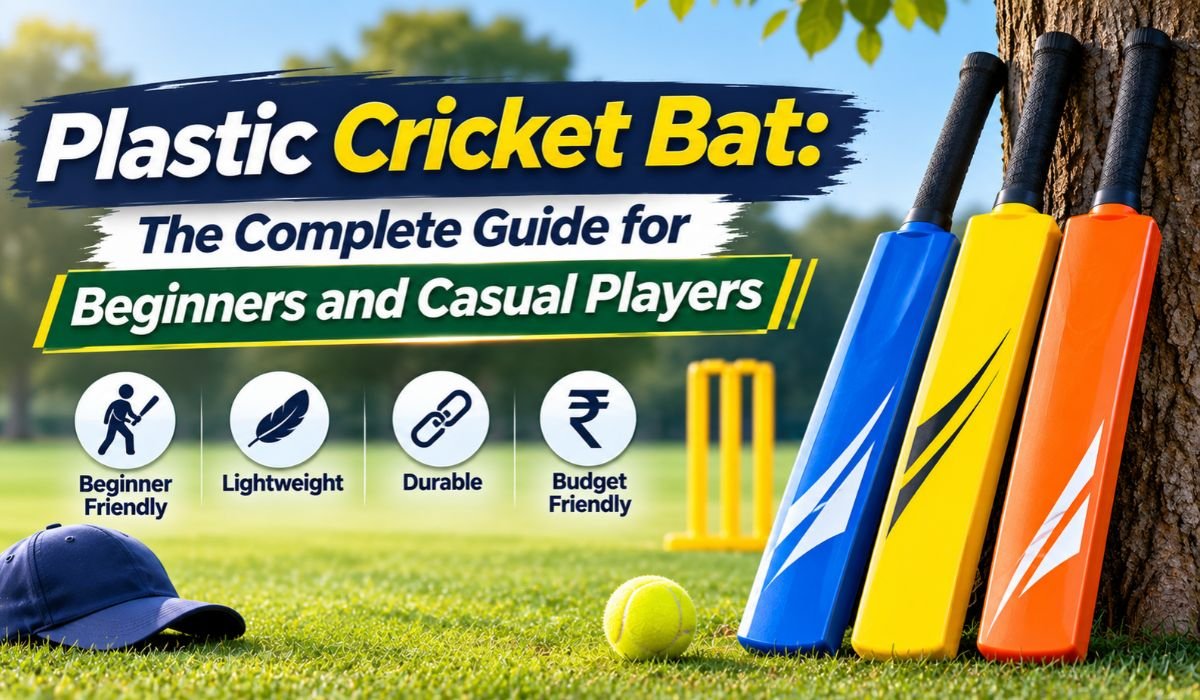
Cricket is a very popular sport around the world. It can be found being played in professional stadiums, on the street, in parks, schools and in people’s yards. When people play as a leisure activity or to learn how to play cricket, they often prefer to use a plastic cricket bat. Plastic cricket bats are lighter than wood ones; therefore, they are easier to swing. Also, they are less expensive than wood ones. They are also made to last longer. They are easy to use, so they make a great choice for kids, beginners and others who like to play for fun and don’t want to spend too much money on wood cricket equipment.
This article will provide information about a plastic cricket bat including why people buy them, what kinds there are, how to pick out the best one for yourself, etc.
What is a Plastic Cricket Bat?
The term “plastic cricket bat” refers to any type of cricket bat which is constructed completely or partially out of plastic materials. This contrasts with a conventional professional cricket bat that would typically be made of either English or Kashmir Willow. A plastic cricket bat has been produced through the use of strong polymer-based materials which will allow it to endure heavy usage, outdoor environments, and impacts caused by hitting a tennis ball or a plastic ball. It is primarily used for recreational play, as well as practicing and playing against others who use tennis balls or soft plastic balls, as opposed to hitting a hard leather cricket ball.
A lightweight and safe plastic cricket bat is often the first choice of many children when they begin to learn how to play cricket. This is because plastic bats are considerably lighter than their wooden counterparts and are therefore safer to handle. Plastic bats are also popular choices for adults who wish to engage in backyard cricket games with friends and family.
Why Choose a Plastic Cricket Bat?
There are many reasons that people choose to use plastic cricket bats rather than traditional wood cricket bats when playing for fun.
1. Affordability
A plastic cricket bat is much less expensive than a wooden one. Because wooden bats must use certain types of willow wood and have skilled craftsmen make them, they are usually very costly. Conversely, plastic cricket bats can be manufactured in large quantities with the help of molds, therefore making the product affordable to everyone.
2. Durability
A plastic cricket bat is much less prone to cracking and breaking than a wooden one, particularly after being subjected to moisture, sun exposure, and/or abuse. It’s therefore highly suitable for playing outside in all types of weather.
3. Lightweight Design
Children and beginners find that wooden bats are too heavy. Plastic cricket bats are lighter, which makes it easier for kids to swing them. This will allow them to practice hitting and improve their hitting abilities without hurting themselves.
4. Low Maintenance
The use of wooden cricket bats is dependent on the application of oil to the wood, the hitting (knocking) of the ball against the bat to break in the wood, and the proper care of the bat through adequate storage. Plastic cricket bats do not need any of this type of care. Plastic cricket bats are simply used by players and then put away until needed again; therefore, they do not suffer the same potential damages that can occur with wooden cricket bats as a result of changes in humidity and temperature.
5. Safety
Since plastic cricket bats are typically used with tennis balls or soft plastic balls, there is less chance of getting hurt when using one than when playing with a hard ball and a wooden bat. Therefore, a plastic cricket bat would be a safer choice for children.
6. Weather Resistance
Plastic does not absorb water like wood, therefore, a plastic cricket bat may be used on slightly wet surfaces and/or during light rainfall without being damaged.
Types of Plastic Cricket Bats
The different types of plastic cricket bats that are sold in stores are meant to be used for different reasons:
1. Standard Plastic Cricket Bat
The most typical kind of plastic cricket bat, is made to look like the conventional cricket bat, having a flat front and a round back. This type of plastic cricket bat is usually utilized in recreational and practicing matches.
2. Mini Plastic Cricket Bat
A scaled down version of the standard plastic cricket bat, created for very young children and toddlers that have recently begun learning the game.
3. Tennis Plastic Cricket Bat
This particular kind of plastic cricket bat was manufactured especially for use with tennis balls, which are commonly found in street and lane gully cricket games.
4. Hard Plastic Cricket Bat
This plastic cricket bat is constructed of a thicker and more rigid plastic material. As such, it will be much more durable than other types of plastic cricket bats and will be able to withstand slightly greater forces applied to the bat during use. This makes this particular type of plastic cricket bat suitable for semi-competitive games.
5. Branded Plastic Cricket Bat
Now many sports companies produce plastic cricket bats which are designed to provide improved grip, better balance, and an attractive design similar to those of bats used by some of the most popular cricketers in the world today.
How to Choose the Right Plastic Cricket Bat
The selection of the appropriate plastic cricket bat depends upon multiple variables. A concise comparison table has been provided below for your reference in making a decision regarding the best option for you:
| Factor | What to Consider | Recommendation |
| Age of Player | Younger children need shorter and lighter bats | Choose a mini plastic cricket bat for kids under 8 years |
| Bat Length | Should match the player’s height | Standard plastic cricket bat for ages 9-15 |
| Weight | Lighter bats are easier to swing | Beginners should choose lightweight plastic cricket bat |
| Grip Quality | Good grip prevents slipping during play | Choose a plastic cricket bat with rubber or foam grip |
| Ball Type Used | Tennis ball or soft plastic ball | Tennis plastic cricket bat is ideal for gully cricket |
| Budget | Plastic bats are generally affordable | Branded plastic cricket bat for better quality and durability |
| Usage Purpose | Casual play vs semi-serious practice | Hard plastic cricket bat for more frequent and intense use |
| Durability Needs | Outdoor and rough usage | Choose thicker plastic cricket bat for longer life |
The table provides a clear comparison of various factors that should be considered prior to purchasing a plastic cricket bat for either yourself or your child.
Benefits of Using a Plastic Cricket Bat for Children
There are several advantages to using a plastic cricket bat when you first start playing cricket.
- The use of this type of toy can assist children in developing their hand-eye coordination without being at risk for injury from the weight of larger items.
- Kids can easily practice their shot-making skills and their swing techniques with a plastic cricket bat because it’s so much lighter than one made from wood.
- Children can’t damage a costly wooden bat, so parents don’t have to be concerned about this, as a plastic cricket bat is cheap to purchase and easily replaced.
- The act of playing with a plastic cricket bat in either the back yard or the local park provides an enjoyable way to spend time together as a family.
- It will help build confidence for young players when they make the transition to using a traditional wooden cricket bat as they grow up.
Plastic Cricket Bat vs Wooden Cricket Bat
A lot of people ask me if they should use a plastic cricket bat or a regular wood one. I will do a quick comparison here.
| Aspect | Plastic Cricket Bat | Wooden Cricket Bat |
| Price | Low cost | Expensive |
| Weight | Lightweight | Heavier |
| Durability | Long-lasting, weather resistant | Prone to cracking |
| Maintenance | No maintenance needed | Requires oiling and knocking |
| Best Used For | Tennis ball, casual play | Hard leather ball, professional play |
| Suitable For | Beginners, children | Experienced and professional players |
| Performance | Good for recreational play | Better for competitive performance |
In addition to being ideal for casual or entry-level cricket, the table shows that plastic bats are also good options for serious and professional players who need a lighter bat.
Where to Buy a Plastic Cricket Bat
Plastic cricket bats are available in many places both online and offline.
- Local sports goods stores
- Supermarkets and toy stores
- Online shopping platforms like Amazon, Flipkart, and other e-commerce websites
- Sports equipment brands’ official websites
When purchasing a plastic cricket bat over the internet, be sure to look at the sizing guide, read what other customers have said about the product, and make sure that you are satisfied with the quality of materials being used.
Tips for Taking Care of Your Plastic Cricket Bat
A plastic cricket bat has very little maintenance requirements when compared to a wooden bat; however, with some simple care steps, you will be able to prolong the useful life of your plastic cricket bat:
- The plastic cricket bat should not be left in direct sunlight for an extended period of time because the heat generated will slightly warp the material over time.
- Clean the bat regularly with a damp cloth to remove dirt and dust.
- Store the plastic cricket bat in a dry place when not in use.
- Do not use too much force when hitting very hard surfaces; otherwise, you might develop small cracks in them as time goes by.
- Check the grip periodically and replace it if it becomes loose or worn out.
Conclusion
A plastic cricket bat is a great option for people who are just starting out playing cricket, children, and those who play the game informally (casual players). The plastic cricket bat has several benefits over other types of bats. It is light-weight, long lasting, inexpensive, and does not pose any danger during play. These qualities make the plastic cricket bat ideal for use in backyard games, gully cricket, and for practicing. As such, whether you’re a parent searching for your child’s first bat or an adult who likes to compete casually against friends, the plastic cricket bat provides both high value and convenience.
To help select the proper plastic cricket bat for your specific requirements, there are a number of things to consider including age, type of grip, overall weight of the bat, and what you plan on using the bat for.
Frequently Asked Questions
1. Is a plastic cricket bat good for beginners?
Yes, a plastic cricket bat is great for beginners since it is light weight, easy to use, and allows new players to work on developing their batting technique without the possibility of getting hurt or damaging the equipment as can happen when using wooden bats.
2. Can a plastic cricket bat be used with a hard leather ball?
No, you cannot use a plastic cricket bat with a hard leather ball. Plastic cricket bats are made to be used with either tennis balls or soft plastic balls. If you were to hit a hard ball with your plastic bat, it could damage the bat and decrease how well it performs.
3. How long does a plastic cricket bat last?
Depending upon the amount of usage (frequency) and the level of quality of the plastic material used in making the bat, a well-maintained plastic cricket bat will typically have a life span of anywhere from two to three months up to a year or more.
4. What is the price range of a plastic cricket bat?
A plastic cricket bat is usually low-cost and can range in price from several hundred rupees for a simple model to somewhat higher costs for branded or durable plastic cricket bats.
5. Is a plastic cricket bat suitable for adults?
Yes, many grown ups use a plastic cricket bat to play informal backyard or street cricket with a tennis ball in front of their home, particularly while they are playing with their family and friends.
6. What is the difference between a plastic cricket bat and a wooden cricket bat?
Plastic cricket bats are light weight, cheap and can be used to play with a soft ball. Wooden cricket bats on the other hand are heavy, expensive, and can only be used to play with a hard leather ball.